Go back
Improving the uptake of flight seats on Jet2.com by 2%
Introduction
Seat selection is a key driver of ancillary revenue in the Jet2 booking path. With 17.7 million passengers flying in 2024, even small improvements at this stage have meaningful financial impact.
I led the redesign of the seat selection component on Jet2.com, focusing on three things: pricing clarity, clearer categorisation, and simplifying the UI, particularly on mobile.
The result was a 2% increase in overall seat uptake, alongside gains in both standard and extra legroom seats.
Key Facts
Audience: 17.7m passengers flew with Jet2 in 2024
Goal: Increase seat selection uptake and booking conversion by improving pricing clarity, seat categorisation, and overall usability
My role: Led UX discovery, prototyping, usability testing, and stakeholder alignment with product, commercial, and technology teams.
Outcome: A redesigned, mobile-first seat selection component that clearly communicates value and options.
Result: This meant increased overall seat uptake by 2%, increased standard seat uptake by 2% and increased extra legroom seats by 1% whilst also contributing to higher ancillary revenue without compromising the booking experience. and improved conversion rates

The Problem
Customers weren’t confidently selecting seats.
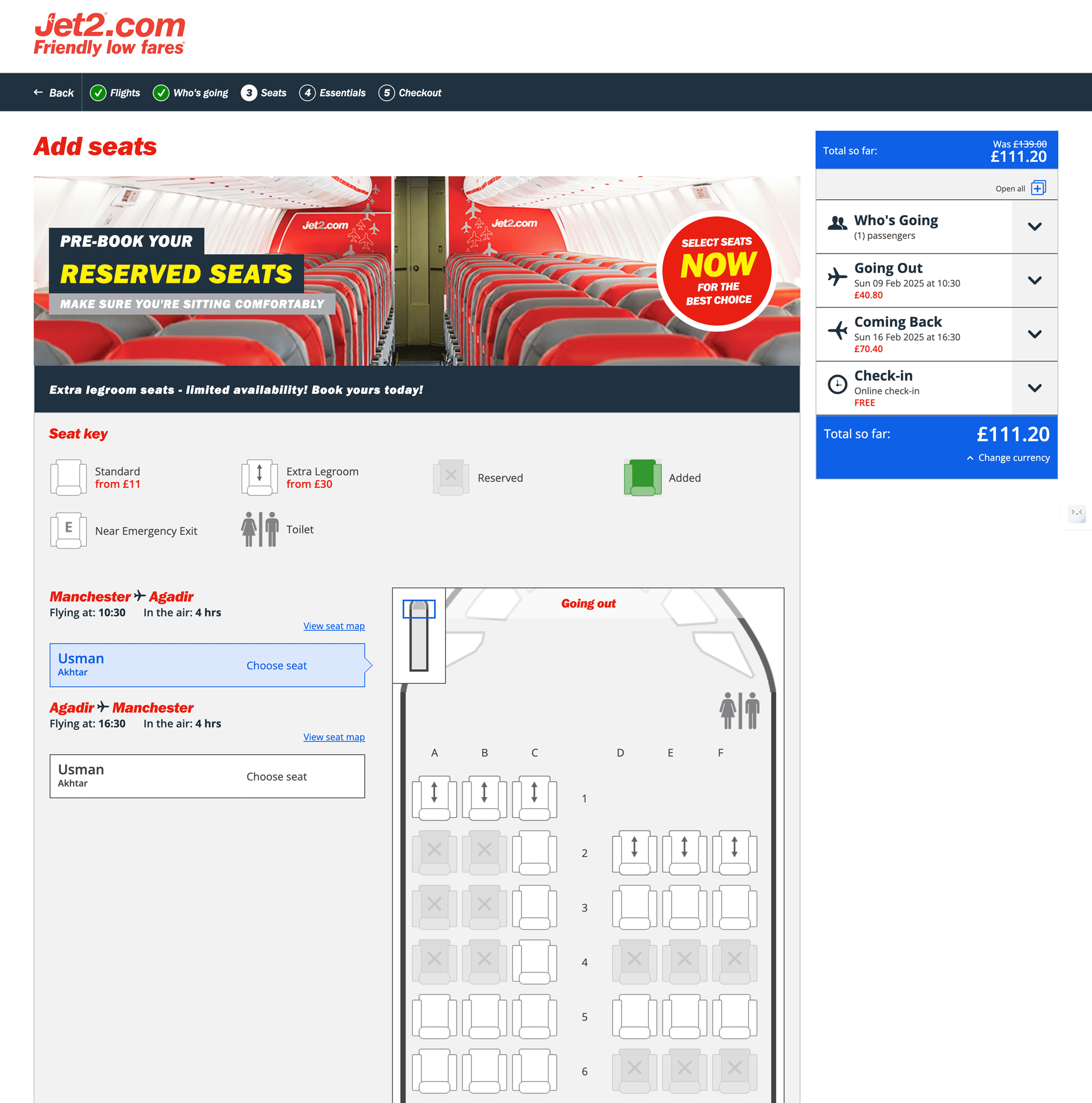
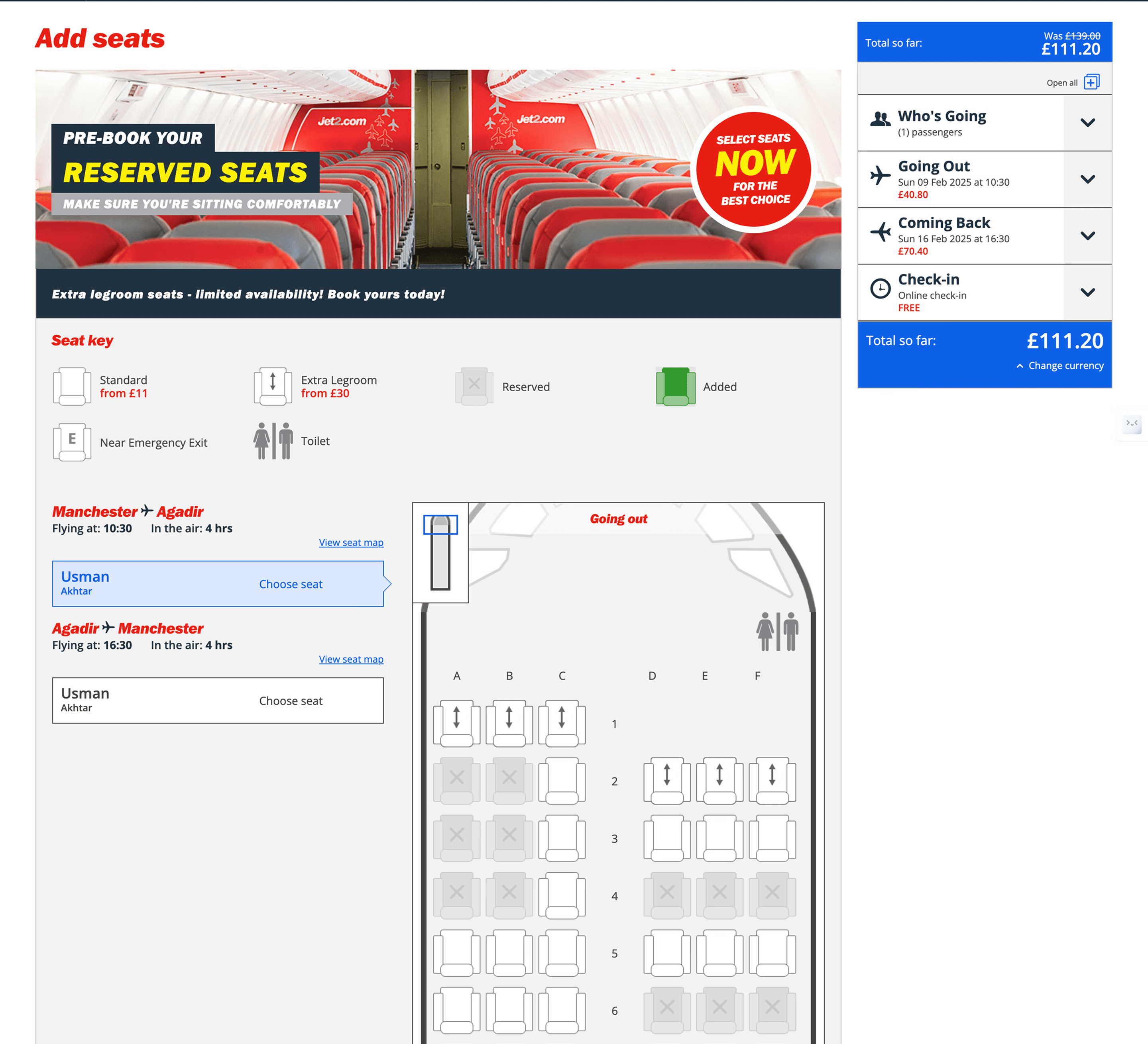
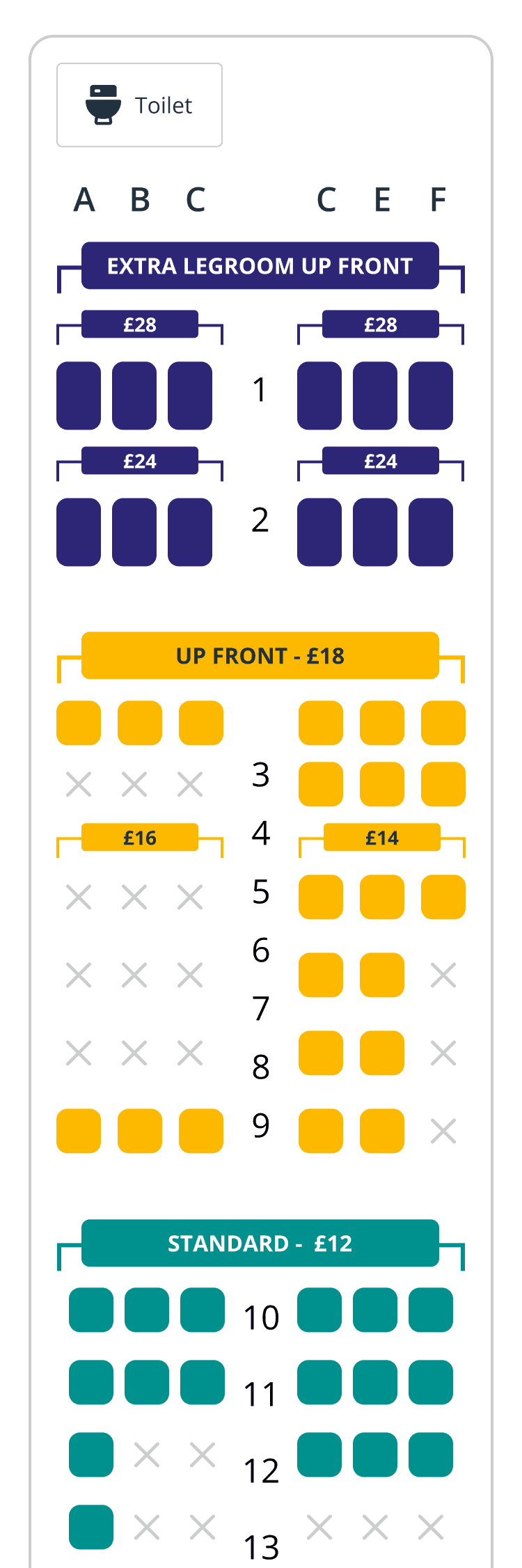
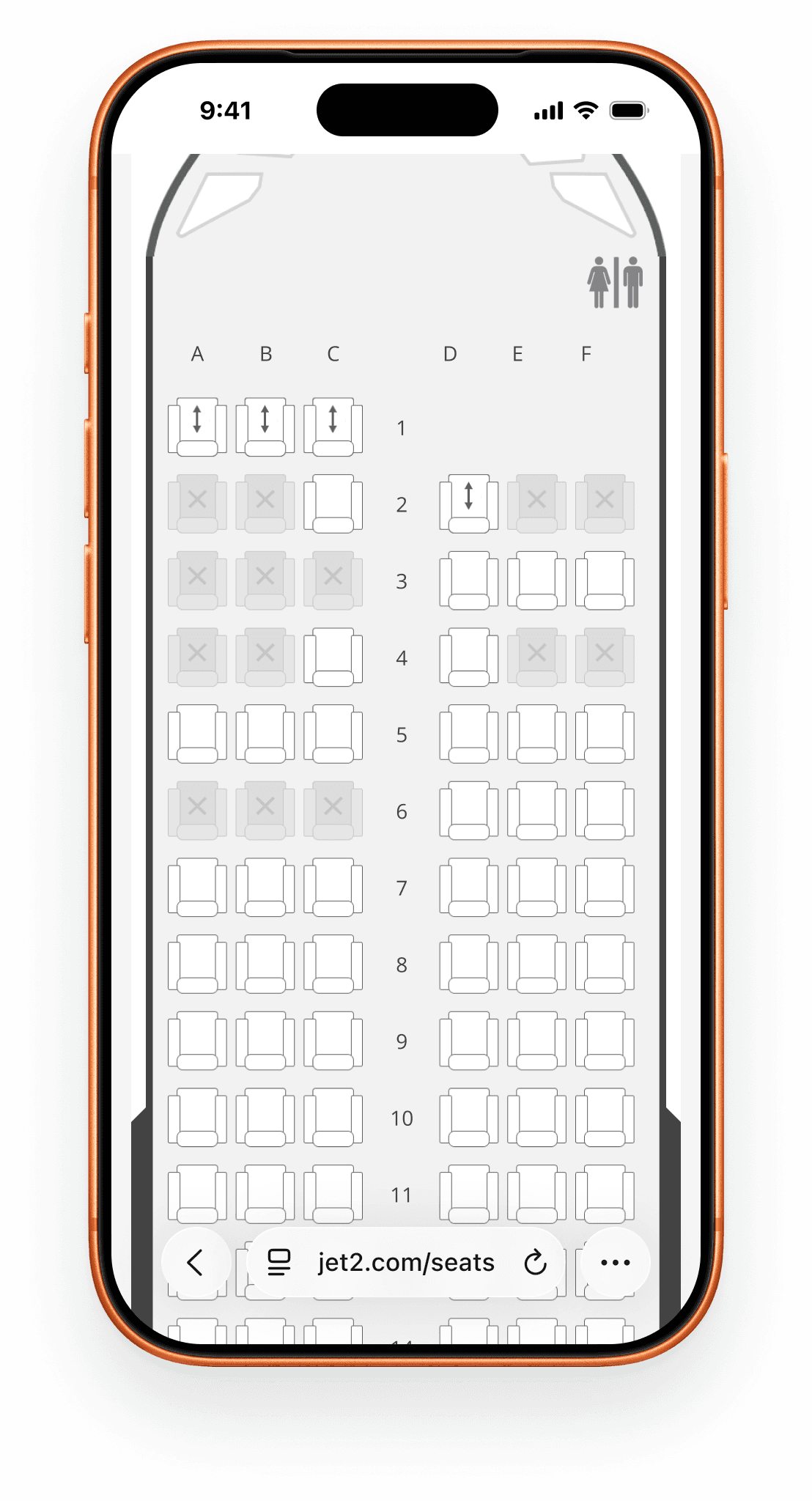
Behavioural data and user testing showed hesitation at the seat selection stage. Pricing felt unclear, seat types weren’t meaningfully grouped and on mobile especially, the UI required too much effort to interpret.
The component had been largely untouched for over a decade due to technical complexity.
It worked, though it hadn’t evolved with changing business needs. That presented a clear opportunity to improve both usability and ancillary revenue without disrupting the wider booking flow.
What We Learned
Through analytics, usability testing, and competitor analysis, three themes consistently emerged.
First, users that wanted to book seats weren’t resistant to paying but were instead faced with uncertainty. When pricing wasn’t immediately clear, people hesitated or skipped seat selection altogether.
Second, the lack of categorisation increased cognitive load. Users had to compare seats one by one instead of understanding the value tiers at a glance.
Third, mobile friction amplified both of these issues. Longer time-on-task and visible hesitation suggested we were asking users to work too hard at a key decision point.
In the end, I concluded that if we reduced uncertainty and made comparison easier, uptake would improve.
Old Seat Map
The Approach
The redesign focused on clarity over decoration.
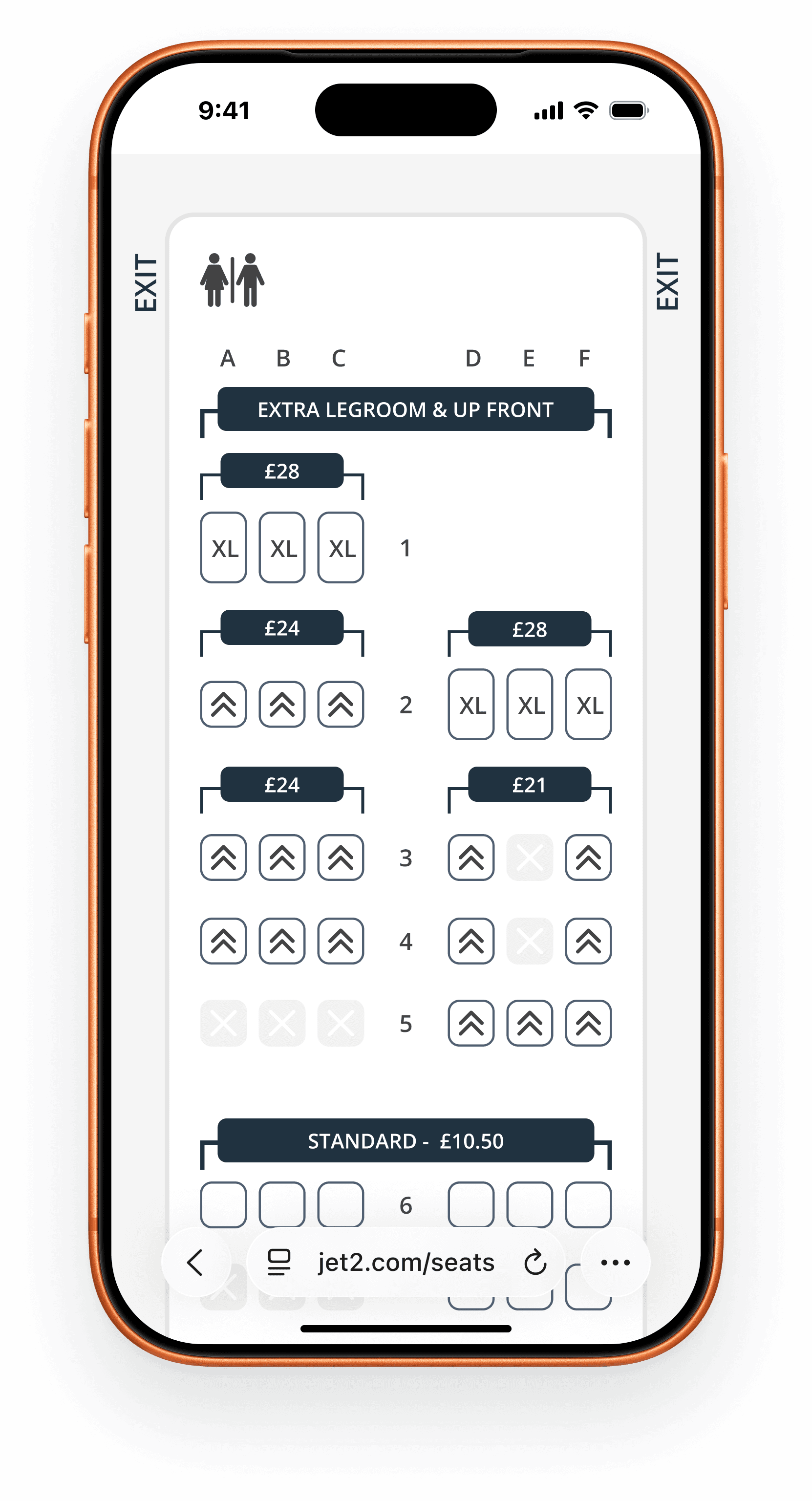
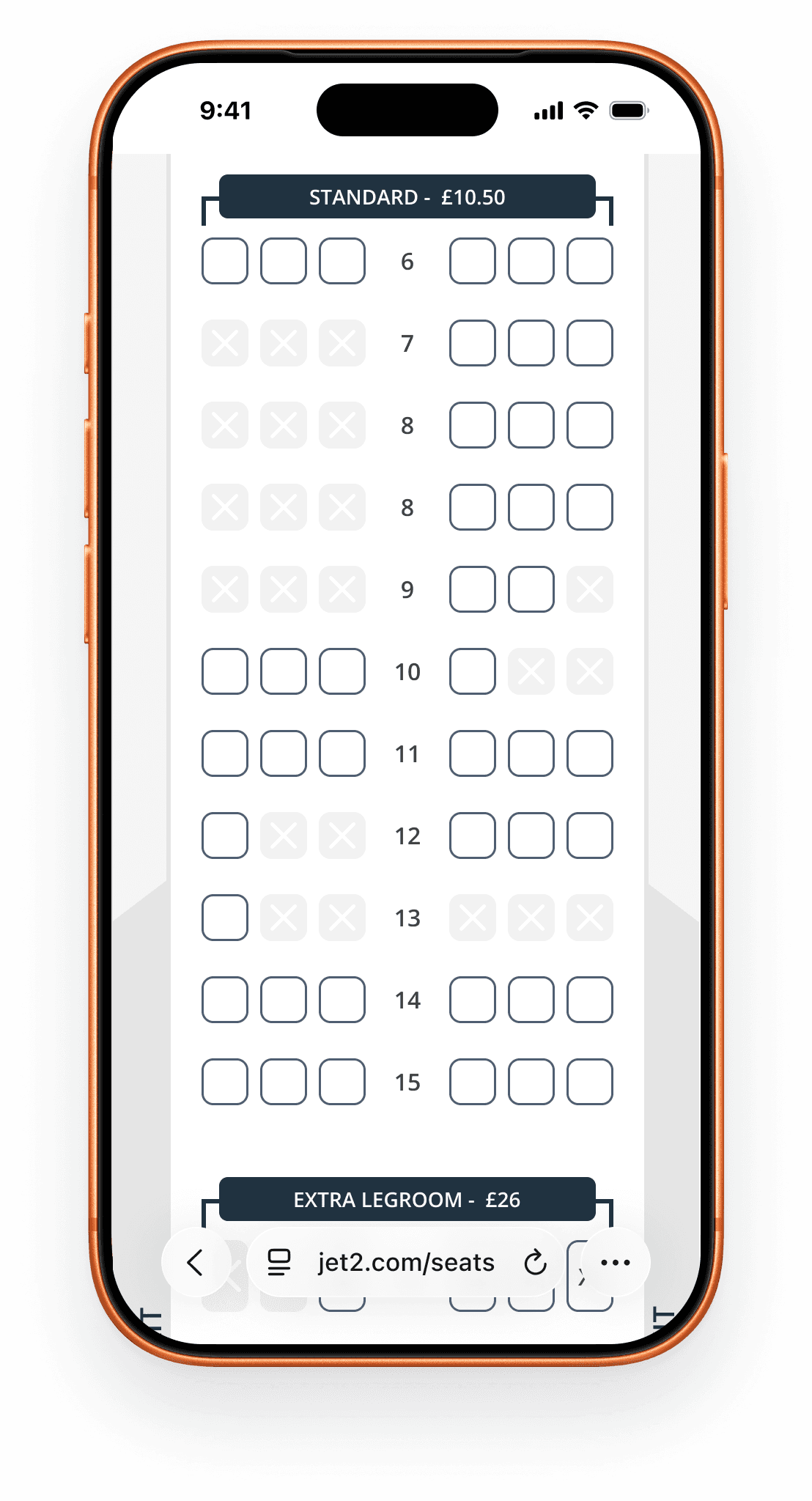
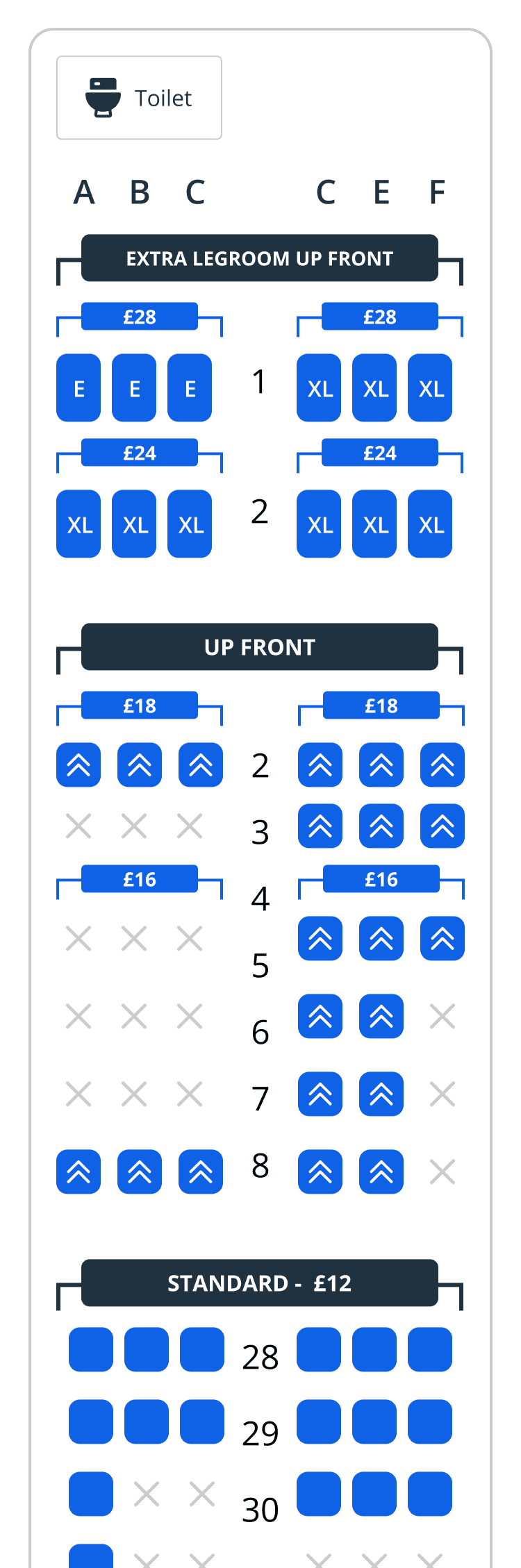
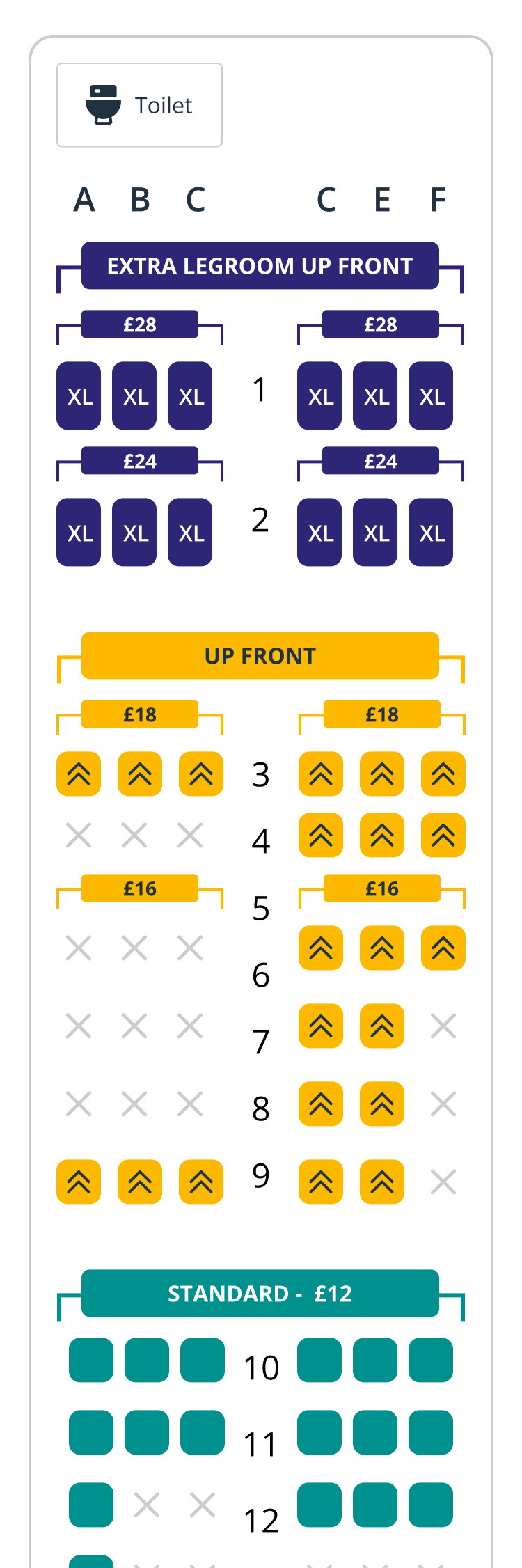
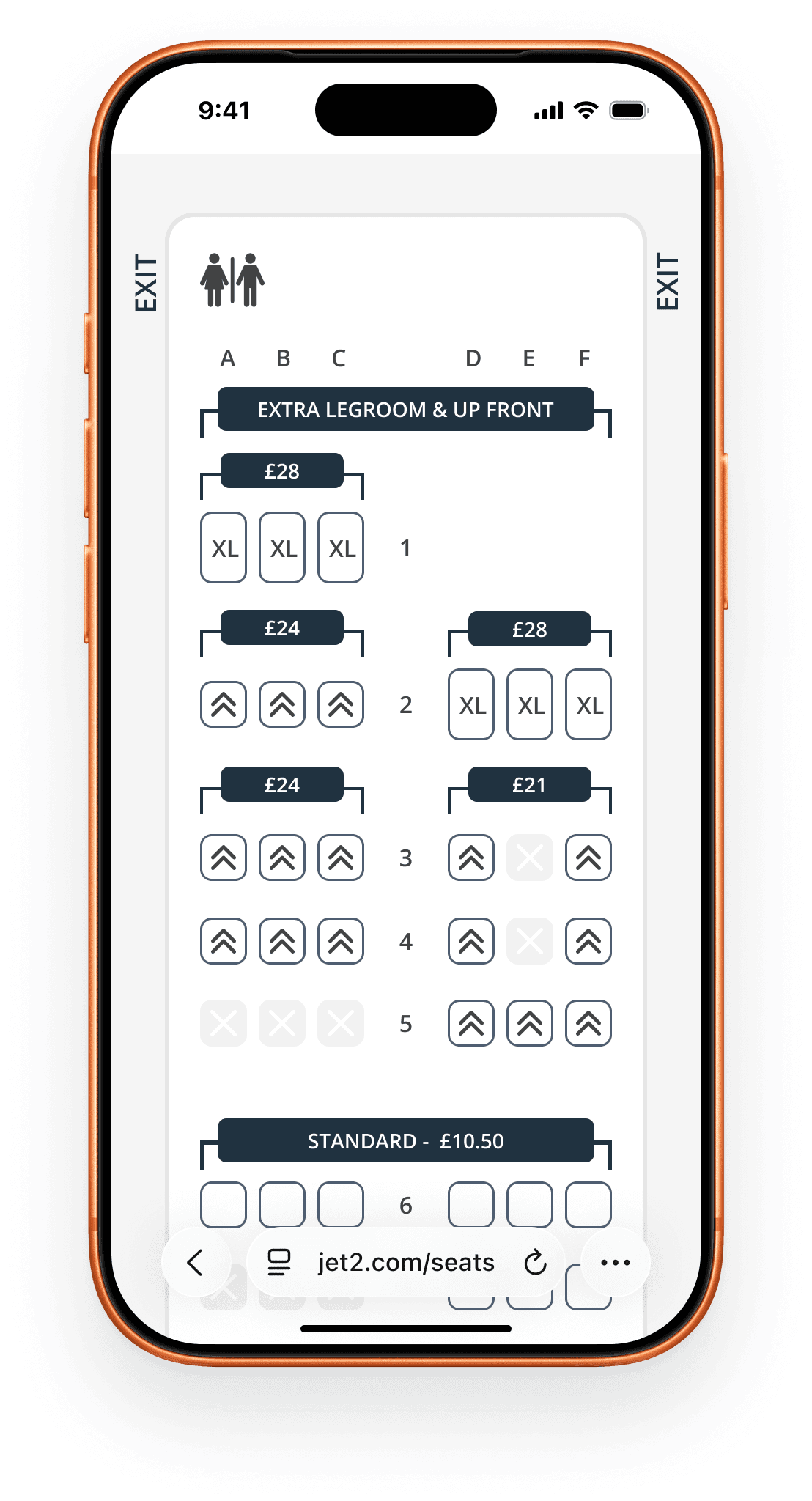
Seats were grouped into clear categories: Standard, Up Front, and Extra Legroom to make value differences obvious. Pricing was surfaced directly within the seat map to remove ambiguity.
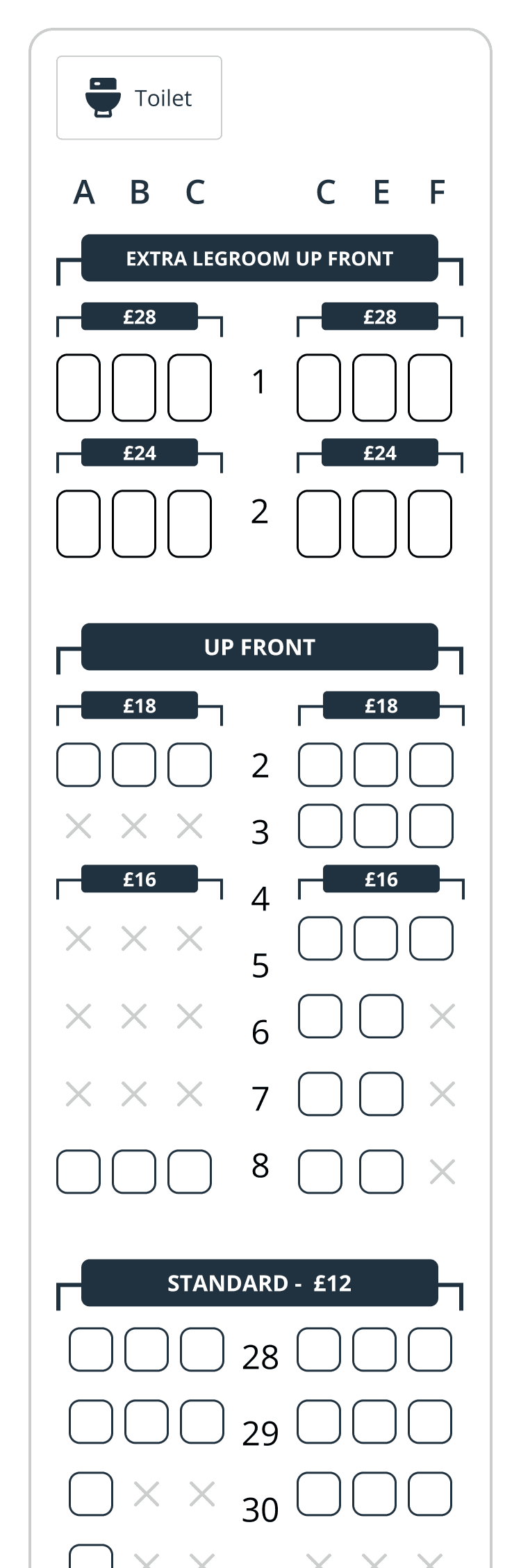
The UI was simplified into a mobile-first layout that prioritised legibility and speed of decision making. There were trade-offs along the way. Early concepts I ideated relied heavily on colour to distinguish seat types, which tested well but raised accessibility concerns.
We evolved this to combine colour, labels, and iconography to avoid relying on colour alone before eventually dropping colour entirely to boost visual clarity.
There was also internal hesitation about making pricing more prominent. The concern was that it might deter purchase. Testing showed the opposite; transparency built trust, and trust
increased uptake.
Validation
Impact
At Jet2’s scale, a 2% uplift represents a meaningful increase in ancillary revenue. More importantly, we improved clarity and confidence at a key moment in the journey without adding friction or overcomplicating the experience.
This project reinforced that users can be more willing to pay when confusion is minimised
Next Steps
The component is now being rolled out across aircraft variations, with further opportunities to refine pricing strategy, optimise mobile interactions, and extend the improvements to Jet2holidays.
Get in touch
Do you have a cool project that you're dying to discuss, maybe you want to talk about design or why Rubber Soul is the best Beatles album?
Send a wee message below and let's come together (ha get it,) to see how I can help breathe some life into your digital products with focussed and functional design.